Wondering why one St. Louis block feels lined with sturdy brick bungalows while another is full of tall row houses, ornate Victorians, or industrial-style lofts? If you are buying, selling, or simply narrowing your search, home style can tell you a lot about how a property may live day to day. Understanding the city’s most common housing types can help you spot the right fit faster and talk about homes more clearly when it is time to tour, list, or compare options. Let’s dive in.
Why St. Louis Homes Feel So Distinct
St. Louis housing reflects layers of history rather than one single look. The City of St. Louis preservation plan groups much of the city’s residential development into broad eras like the Walking City, Victorian City, and World’s Fair City, but those eras overlap instead of ending neatly.
That is why you can see narrow brick townhouses, decorative Victorian homes, early-20th-century bungalows, foursquares, two-family flats, and loft conversions all across the city. For you as a buyer or seller, that mix means style is more than curb appeal. It is often a clue to layout, scale, and upkeep.
One feature shows up again and again: brick. After the 1849 fire, new buildings were required to be built of stone or brick, and that history still shapes the look of many older St. Louis streets today.
Brick Bungalows: A Classic St. Louis Favorite
If you picture a charming St. Louis single-family home, a brick bungalow may be what comes to mind. The city preservation plan describes these homes as one-story houses with two broad front-facing gables, tapered porch posts, and Arts & Crafts detailing.
For many buyers, that often means a compact layout and fewer stairs. These homes also tend to put a lot of their personality into the front porch, roofline, and trim details.
You will see bungalow examples in neighborhoods such as Tower Grove South, Holly Hills, and St. Louis Hills. If you are searching online, using terms like brick bungalow or Craftsman bungalow can help you find homes with this look and feel more quickly.
What buyers often like about bungalows
Bungalows often appeal to people who want character without a very large footprint. Their lower profile can also make them feel approachable and easy to live in.
Common traits include:
- One-story or low-rise living
- Strong front porch presence
- Arts-and-Crafts-inspired details
- Brick exteriors in many St. Louis examples
American Foursquares: Boxy Outside, Practical Inside
American Foursquares offer a different kind of presence. According to the city, these homes are typically two or two-and-a-half stories with a square plan, a pyramidal roof, and an entry set to one side under a small porch.
From the street, a foursquare can look formal and balanced. Inside, the city notes that the floor plan was more open than older Victorian layouts, making these homes a useful bridge between historic character and practical flow.
If you want more vertical living space than a bungalow usually offers, a foursquare may be worth a closer look. Search terms like American Foursquare can help you zero in on this style when browsing listings.
Victorian Homes: Ornate Brick Character
St. Louis Victorian homes often bring the most visual drama. The city identifies Queen Anne homes by features like asymmetrical facades, projecting bays, turrets, and decorative brickwork, and notes that many local examples are brick.
Second Empire homes stand out for their mansard roofs and are especially associated with Lafayette Square. The preservation plan also points to Romanesque Revival and Shingle-style homes in areas such as Soulard, the Central West End, Compton Hill, and Carondelet.
For you, Victorian styles often signal more ornament, more varied rooflines, and more finish detail. That can be a major draw if you love architecture, but it can also mean you will want to pay close attention to condition and exterior maintenance.
Common Victorian style cues
Look for details such as:
- Decorative brickwork
- Bay windows
- Turrets or towers
- Mansard roofs on Second Empire homes
- Asymmetrical front elevations
Smaller Brick Cottages and Shaped-Parapet Homes
Not every historic St. Louis home is large or highly ornate. The city also identifies shaped-parapet single-family houses, which are one-story brick homes with a narrow street-facing front and a decorative shaped parapet.
These homes can be a smart style to know if you want an older city property with character in a smaller footprint. Decorative or glazed brick often adds visual interest without the height or scale of a townhouse or foursquare.
For buyers, this is a helpful reminder that “historic” in St. Louis can mean many different sizes and layouts. Smaller homes can still offer strong curb appeal and classic masonry character.
Townhouses and Row Houses: Narrow Lots, Urban Form
The townhouse is one of the most common house types from St. Louis’s Walking City era. The city describes these homes as being built close together on narrow lots, with front facades that are taller than they are wide.
That shape often creates a strong street presence and a more compact urban footprint. Some appear in rows, while others are detached townhouses separated by narrow side yards or gangways.
If you are drawn to older city neighborhoods, terms like townhouse or row house can help refine your search. These homes usually live differently from a freestanding suburban property, with a more vertical and linear layout.
Two-Family Flats and Walk-Ups
St. Louis also has a long tradition of flats and walk-up apartment buildings. The city defines a two-family flat as a building with more than one dwelling unit, each with its own entrance, and notes that walk-up apartment buildings were widespread in the first two decades of the 20th century.
Many examples are two or three stories with stacked units, porches, or balconies. Neighborhoods such as Skinker-DeBaliviere and Academy are specifically noted for having many flats.
If you are browsing residential options in the city, understanding the difference between a single-family home, a flat, and a walk-up can save time. The exterior may look similar to other historic buildings at first glance, but the living arrangement can be very different.
Lofts: Adaptive Reuse With Industrial Character
Loft living in St. Louis is closely tied to adaptive reuse. City sources describe vacant warehouses and old schools being converted into loft apartments in places such as the Central West End and Soulard.
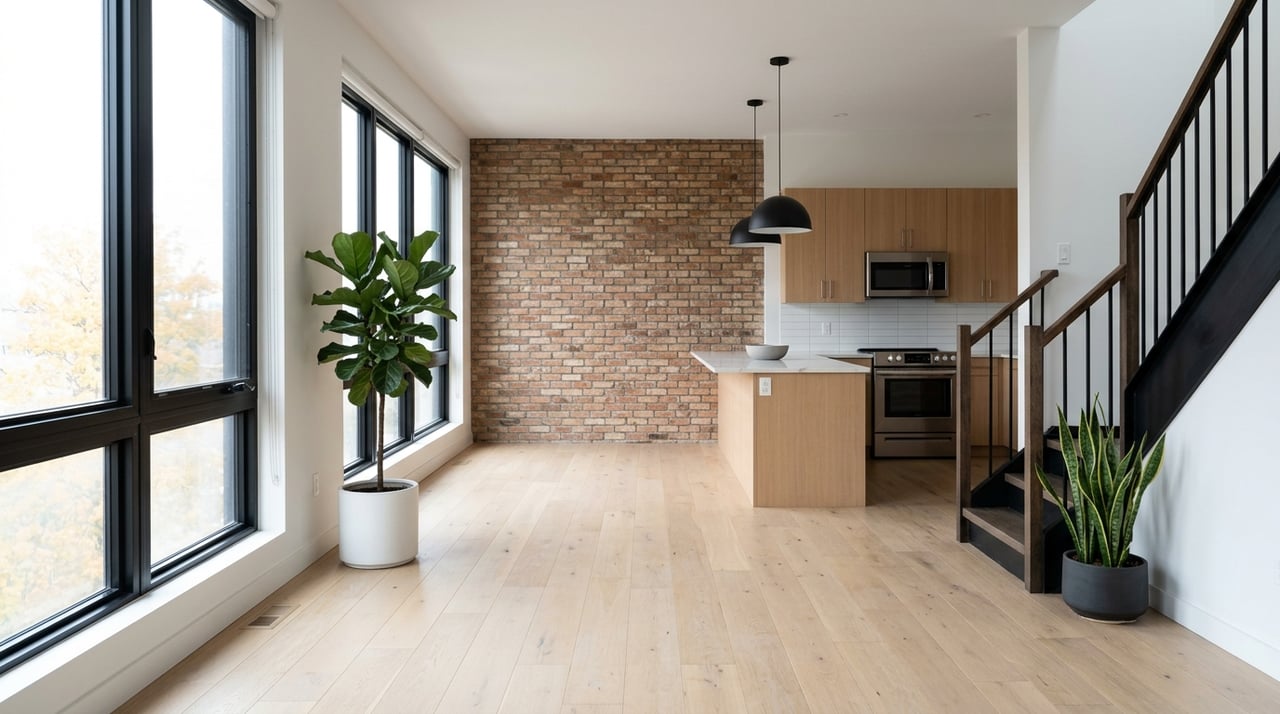
St. Louis lofts often keep visual clues from the original building. Think exposed brick, high ceilings, exposed ductwork, concrete floors, and large windows.
If you like open, flexible space and a more industrial look, lofts may stand out to you right away. Searching phrases like loft conversion can help you find properties with that original-building character.
Contemporary Townhomes in Redevelopment Areas
Not every attached home in St. Louis comes from an older historic era. Modern townhomes often appear in redevelopment and infill projects rather than on the oldest streetcar-era blocks.
City examples include projects in Preservation Square and the plan that helped create newly constructed homes in what became Botanical Heights. For buyers, that means the term townhome may sometimes point to newer construction, especially in planned redevelopment areas.
If you want attached living with a more current layout and newer systems, this can be a useful category to explore. It is also a good reminder to look beyond the label and ask when the home was built.
What Style Can Tell You About Daily Living
Home style is not just visual. It often gives you a practical shortcut to how a home may function.
Here is a simple way to think about it:
- Bungalows are typically lower-rise and often single-story
- Foursquares are more stacked and vertical
- Townhouses are narrow and linear
- Flats and walk-ups involve multi-unit living and shared circulation
- Lofts tend to be the most open and flexible
This kind of shorthand can help you move from “I like the look” to “I think I would enjoy living here.” It is especially useful when comparing very different property types across St. Louis neighborhoods.
Why Maintenance Terms Matter in St. Louis
If you are buying or selling an older St. Louis home, style often connects directly to maintenance. The City of St. Louis says ordinary repairs to residential buildings of up to four units usually do not require a permit, but structural changes, additions, porches, decks, attic or basement conversions, and certain roof or fence projects do.
In city historic districts or landmarks, exterior painting, gutters and downspouts, windows, doors, tuckpointing, all fences, and awnings or canopies require approval, even when a regular building permit might not be needed. That makes terms like tuckpointing and masonry upkeep especially important for older brick homes.
For sellers, understanding these terms can help you prepare your home thoughtfully before listing. For buyers, they can help you ask better questions as you compare properties.
Search Smarter With St. Louis Style Terms
When you know the local vocabulary, your home search gets easier. In St. Louis, some of the most useful phrases combine form and material, such as brick bungalow, American Foursquare, Victorian row house, two-family flat, loft conversion, or townhome.
Those terms closely match the forms described in the city’s preservation and neighborhood materials. Instead of searching only by price or bedroom count, you can add style terms that better reflect how you want a home to look and live.
If you are preparing to sell, this vocabulary matters too. The right style language can help position your home more clearly and attract buyers who already appreciate its character.
If you are trying to make sense of St. Louis home styles or preparing to buy or sell a home with distinctive character, local guidance makes all the difference. The right strategy starts with understanding how a home’s design, layout, and presentation shape buyer interest. Connect with Emily Bliss- Bliss Homes for thoughtful, design-aware support tailored to your next move.
FAQs
What is a brick bungalow in St. Louis?
- A brick bungalow in St. Louis is typically a one-story home with broad front-facing gables, tapered porch posts, and Arts & Crafts detailing, according to the city preservation plan.
What defines an American Foursquare home in St. Louis?
- An American Foursquare in St. Louis is usually a two- or two-and-a-half-story house with a square plan, a pyramidal roof, and a side-set entry under a small porch.
What makes St. Louis Victorian homes different from bungalows?
- St. Louis Victorian homes often feature more ornament, asymmetrical facades, projecting bays, turrets, decorative brickwork, or mansard roofs, while bungalows are generally lower-rise and simpler in form.
What is a two-family flat in St. Louis?
- A two-family flat is a building with more than one dwelling unit, with each unit having its own entrance, according to the City of St. Louis preservation materials.
What should buyers know about loft conversions in St. Louis?
- St. Louis loft conversions often come from former warehouses, schools, or other older buildings and may include exposed brick, large windows, high ceilings, and open layouts.
What maintenance terms matter for older brick homes in St. Louis?
- Buyers and sellers should know terms like tuckpointing and masonry upkeep, and they should also check whether permit or historic-district approval may apply to planned exterior work.
What search terms help when looking for St. Louis home styles?
- Useful St. Louis search terms include brick bungalow, American Foursquare, Victorian row house, two-family flat, loft conversion, and townhome.